
 Image 1 of 2
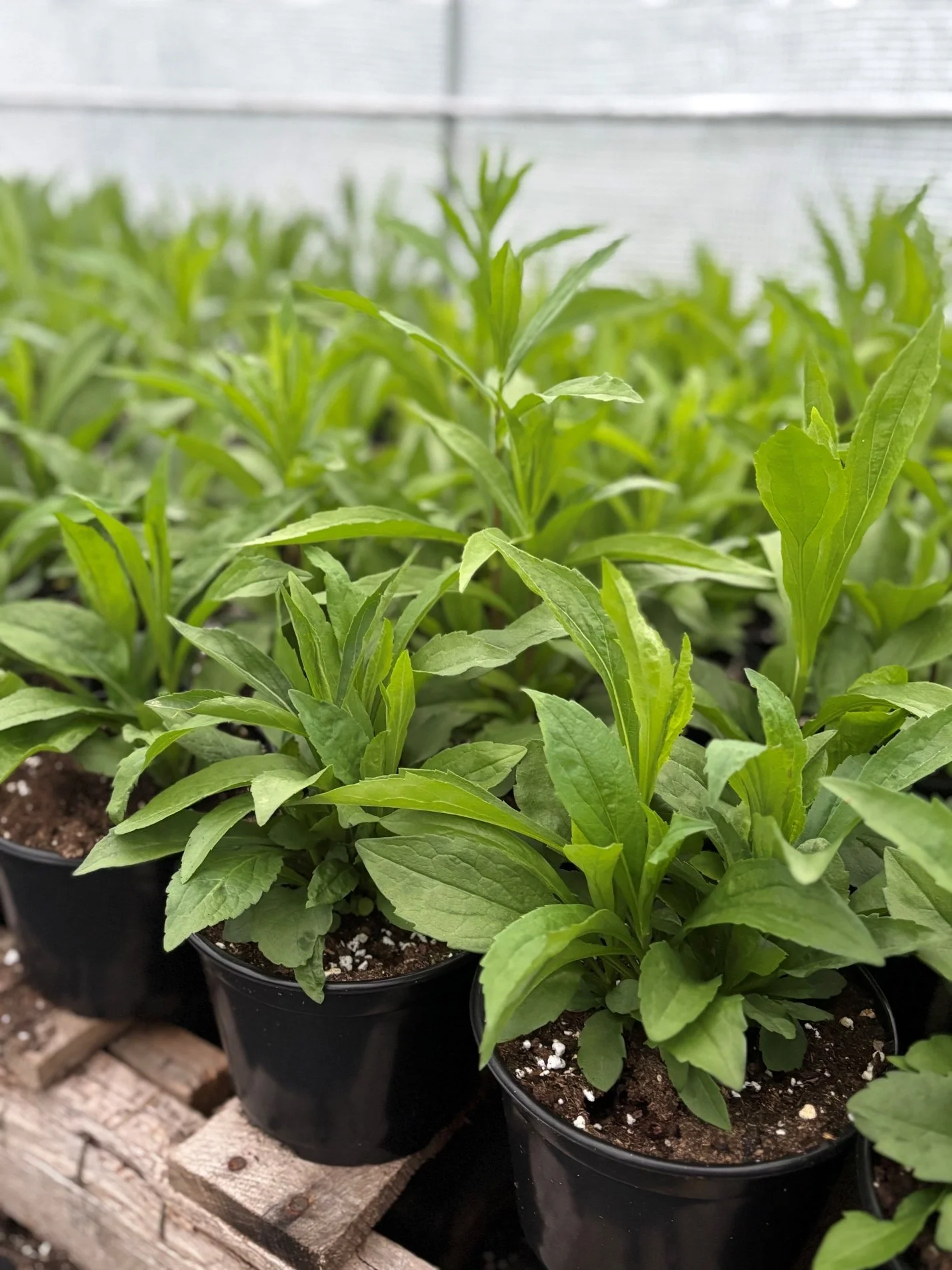 Image 2 of 2
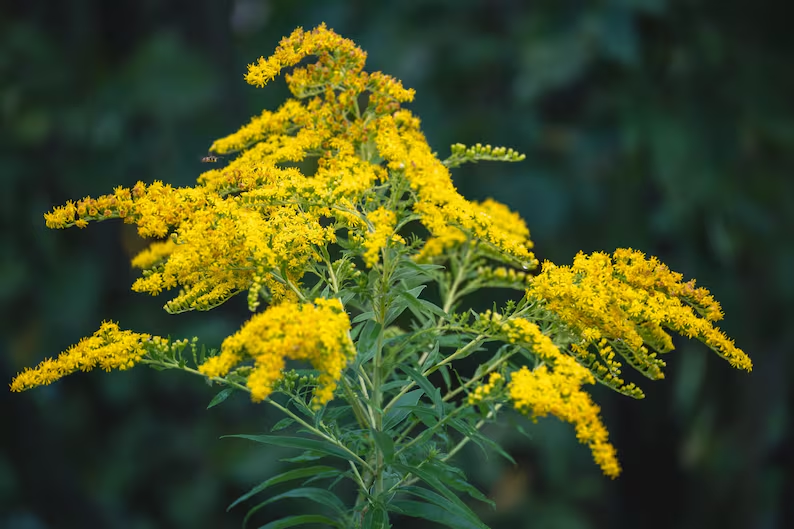
Tall Goldenrod is a tall, native perennial wildflower found throughout much of North America. It is famous for its arching plumes of bright yellow flowers that bloom in late summer and fall, providing a critical food source for pollinators before winter. All plants come in 1.5 quart pots.
Key facts:
Scientific name:Solidago altissima
Family: Asteraceae
Height: Typically 3–8 feet (0.9–2.4 m)
Bloom time: Late summer through fall
Flower color: Bright yellow
Habitat: Prairies, meadows, roadsides, old fields, and woodland edges
Growing conditions: Full sun; adaptable to a variety of soils, including dry and poor soils
Ecological importance:
Supports hundreds of species of insects, making it one of the most valuable native plants for wildlife.
Provides nectar and pollen for bees, butterflies, wasps, beetles, and other pollinators.
Serves as a host plant for numerous native moths and other insects.
Produces seeds that are eaten by some birds.
Distinctive features:
Tall, upright stems often growing in colonies.
Dense, plume-like clusters of tiny yellow flowers at the tops of stems.
Narrow, lance-shaped leaves arranged alternately along the stem.
Often forms large golden displays in fields during autumn.
Common misconception:
Goldenrod is often blamed for seasonal allergies, but its pollen is heavy and insect-pollinated. The real culprit is frequently Common Ragweed, which blooms at the same time and releases large amounts of windborne pollen.
Garden value:
Excellent for pollinator gardens, native meadows, and naturalized areas.
Provides outstanding late-season color and wildlife benefits.
Can spread vigorously through rhizomes and self-seeding, making it best suited for larger spaces or managed plantings.
Summary:
Tall goldenrod is a robust native wildflower that produces spectacular yellow blooms in late summer and fall. It is one of the most important plants for supporting pollinators and beneficial insects, making it a cornerstone species in native habitat restoration and wildlife-friendly gardens.
Tall Goldenrod is a tall, native perennial wildflower found throughout much of North America. It is famous for its arching plumes of bright yellow flowers that bloom in late summer and fall, providing a critical food source for pollinators before winter. All plants come in 1.5 quart pots.
Key facts:
Scientific name:Solidago altissima
Family: Asteraceae
Height: Typically 3–8 feet (0.9–2.4 m)
Bloom time: Late summer through fall
Flower color: Bright yellow
Habitat: Prairies, meadows, roadsides, old fields, and woodland edges
Growing conditions: Full sun; adaptable to a variety of soils, including dry and poor soils
Ecological importance:
Supports hundreds of species of insects, making it one of the most valuable native plants for wildlife.
Provides nectar and pollen for bees, butterflies, wasps, beetles, and other pollinators.
Serves as a host plant for numerous native moths and other insects.
Produces seeds that are eaten by some birds.
Distinctive features:
Tall, upright stems often growing in colonies.
Dense, plume-like clusters of tiny yellow flowers at the tops of stems.
Narrow, lance-shaped leaves arranged alternately along the stem.
Often forms large golden displays in fields during autumn.
Common misconception:
Goldenrod is often blamed for seasonal allergies, but its pollen is heavy and insect-pollinated. The real culprit is frequently Common Ragweed, which blooms at the same time and releases large amounts of windborne pollen.
Garden value:
Excellent for pollinator gardens, native meadows, and naturalized areas.
Provides outstanding late-season color and wildlife benefits.
Can spread vigorously through rhizomes and self-seeding, making it best suited for larger spaces or managed plantings.
Summary:
Tall goldenrod is a robust native wildflower that produces spectacular yellow blooms in late summer and fall. It is one of the most important plants for supporting pollinators and beneficial insects, making it a cornerstone species in native habitat restoration and wildlife-friendly gardens.