
 Image 1 of 2
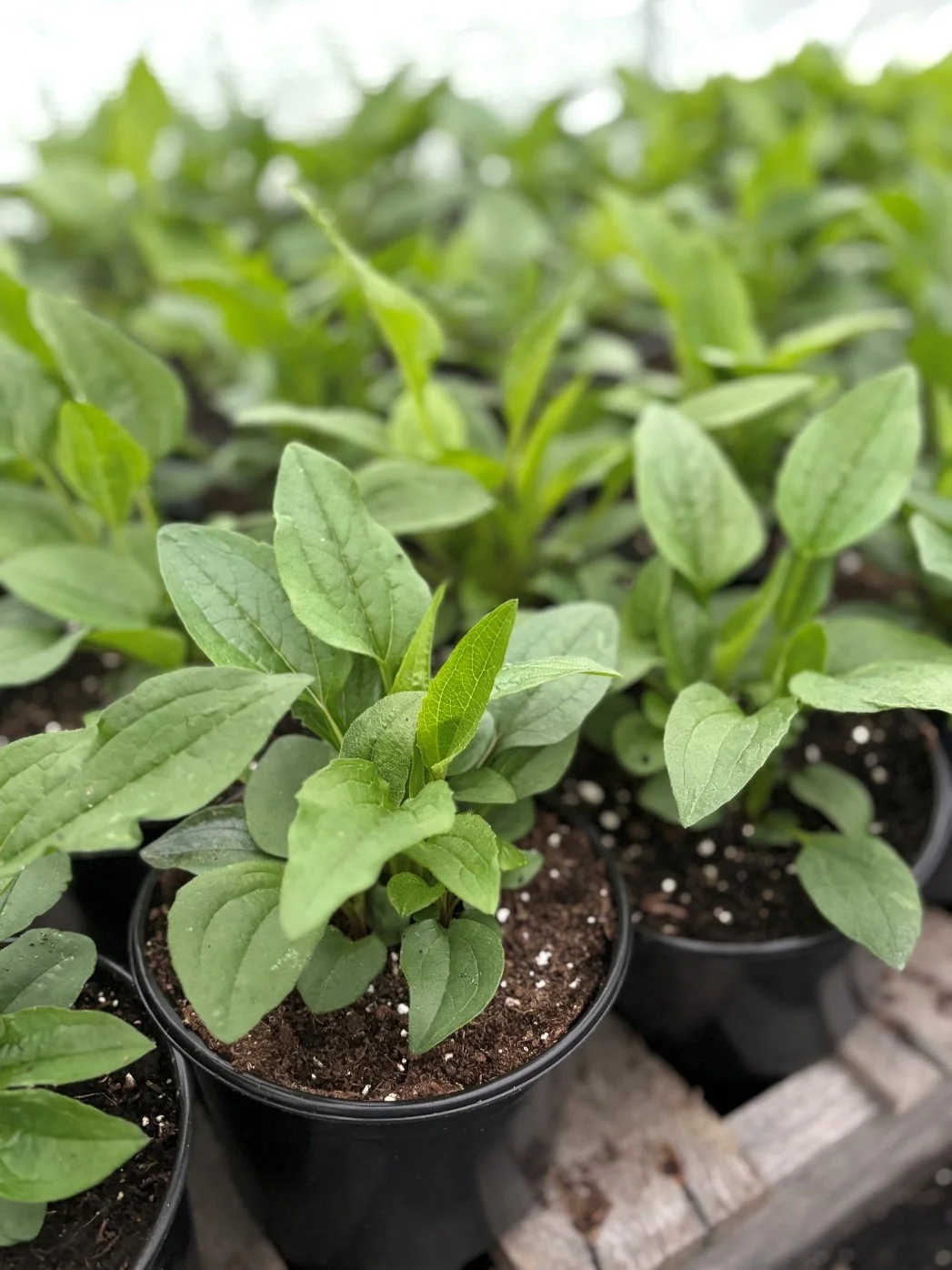 Image 2 of 2
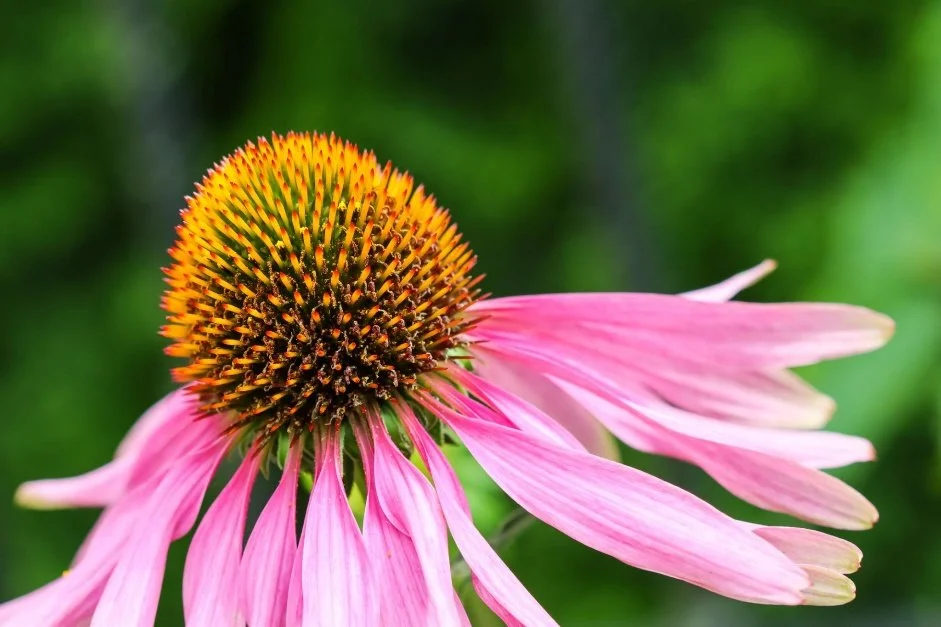
Purple Coneflower is a perennial wildflower native to eastern and central North America. It is known for its large, daisy-like flowers with purple-pink petals surrounding a prominent spiky orange-brown center cone. All plants come in 1.5 quart pots.
Key facts:
Scientific name:Echinacea purpurea
Family: Asteraceae (daisy family)
Height: Typically 2–5 feet (0.6–1.5 m)
Bloom time: Summer through early fall
Habitat: Prairies, open woodlands, and meadows
Growing conditions: Prefers full sun and well-drained soil; tolerant of drought once established
Ecological importance:
Attracts pollinators such as bees and butterflies.
Provides seeds that birds, especially American Goldfinch, eat in autumn and winter.
Supports biodiversity in native plant gardens.
Human uses:
Widely grown as an ornamental garden plant.
Some herbal products use echinacea extracts, though scientific evidence for health benefits varies depending on the use and preparation.
Summary:
Purple coneflower is a hardy native perennial valued for its showy flowers, ability to attract pollinators, and adaptability to a variety of garden conditions. It is one of the most popular native wildflowers in North American landscaping.
Purple Coneflower is a perennial wildflower native to eastern and central North America. It is known for its large, daisy-like flowers with purple-pink petals surrounding a prominent spiky orange-brown center cone. All plants come in 1.5 quart pots.
Key facts:
Scientific name:Echinacea purpurea
Family: Asteraceae (daisy family)
Height: Typically 2–5 feet (0.6–1.5 m)
Bloom time: Summer through early fall
Habitat: Prairies, open woodlands, and meadows
Growing conditions: Prefers full sun and well-drained soil; tolerant of drought once established
Ecological importance:
Attracts pollinators such as bees and butterflies.
Provides seeds that birds, especially American Goldfinch, eat in autumn and winter.
Supports biodiversity in native plant gardens.
Human uses:
Widely grown as an ornamental garden plant.
Some herbal products use echinacea extracts, though scientific evidence for health benefits varies depending on the use and preparation.
Summary:
Purple coneflower is a hardy native perennial valued for its showy flowers, ability to attract pollinators, and adaptability to a variety of garden conditions. It is one of the most popular native wildflowers in North American landscaping.